
For My Mom with LOVE: “Freeport is no place to live, son. It’s too flat.”
Dear Editor,
The afternoon sun of September 2026 baked the cracked asphalt of Queen’s Highway but Trevor wasn’t looking at the sky. He was looking down at the limestone beneath his boots.
Seven years had passed since Hurricane Dorian tore the skin off Grand Bahama and Abaco, leaving a scar in the collective memory of the Bahamas that time refused to heal.
For seven years, the official narrative had been about climate change, rising sea levels, and the sheer, unpredictable malice of Category 5 monsters. But Trevor knew better. He remembered his mother’s voice echoing from the 1980s, a warning that felt more like prophecy with every passing season: “Freeport is no place to live, son. It’s too flat.”
He hadn’t fully understood her then. He does now.
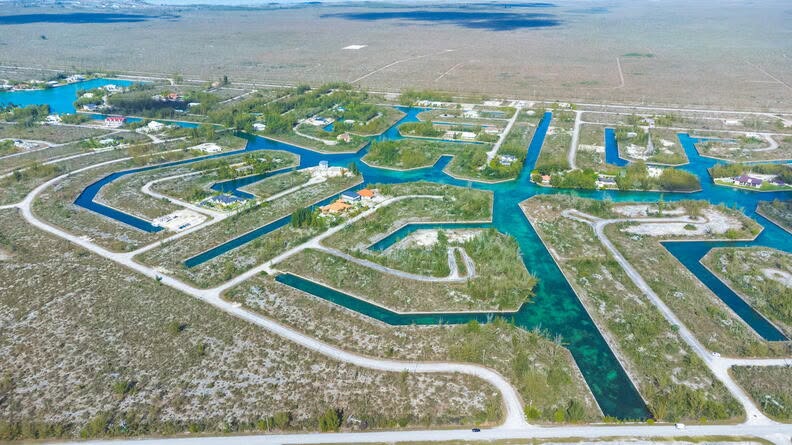
Trevor pulled out his phone, opening a satellite map of Freeport. From space, the island looked like a patient on an operating table, scarred by a grid of endless, jagged blue lines. These weren’t natural rivers. They were the veins of human greed—mile after mile of man-made canals, cut deep into the island’s heart.
The story of the flooding wasn’t just a story of wind and rain; it was a story of what lay beneath.
For generations, the thick limestone crust acted as the Bahamas’ natural armor, a porous yet resilient shield designed to buffer the surging Atlantic. But decades ago, the destruction began. In the 1940s and 50s, the ancient pine barrens were stripped clean for lumber. Then came the heavy machinery. Investors and industrial giants arrived, mining the precious limestone for medical tablets, industrial use, and commercial profit. They sliced open the shoreline to build inland marinas, carving deep pathways so wealthy tourists could park their yachts right at their doorsteps.
Every canal cut was a breach in the armor. Every dredged shoreline was a doorway left wide open for the ocean.
When Dorian stalled over Grand Bahama in 2019, the sea didn’t just crawl over the beaches; it rushed through the man-made highway of canals. With the limestone crust broken and the protective pine trees gone, the storm surge bypassed the island’s natural defenses entirely. The ocean met the water table, filling underground caves and exploding upward into living rooms that had never seen a drop of saltwater in a century.
It wasn’t just Grand Bahama, either. Lately, Trevor had been talking to friends down in New Providence. The southwestern side of that island, historically safe from heavy flooding, had recently suffered unprecedented inundation. The culprit? Another massive, newly cut inland marina. The excavation had breached the underground cave systems, creating a direct subterranean conduit for the sea to reclaim the land from the inside out.
“We were warned,” Trevor muttered to himself, thinking of the legendary Bahamian environmentalists who had shouted into the wind for decades, their reports buried under promises of economic growth and luxury developments.
The big question weighing on the country in 2026 was no longer why it was happening, but what do we do now?
The answer required courage that went beyond building higher seawalls or passing out sandbags. It required a complete halt to the madness. Trevor joined a growing chorus of locals demanding an immediate moratorium on inland marina construction. The message was clear: no more slicing into the limestone shield, no more opening underground floodgates for the sake of a developer’s profit margin.
As the peak of another hurricane season loomed, Trevor looked out at the ocean. The storms would always come—that was the reality of living in paradise. But the flooding didn’t have to be an inevitability. The Bahamas could no longer afford to trade its geological armor for a few pieces of silver, because when the sea rises, the water always demands its price.
GCF