

By: www.thegallery242.com
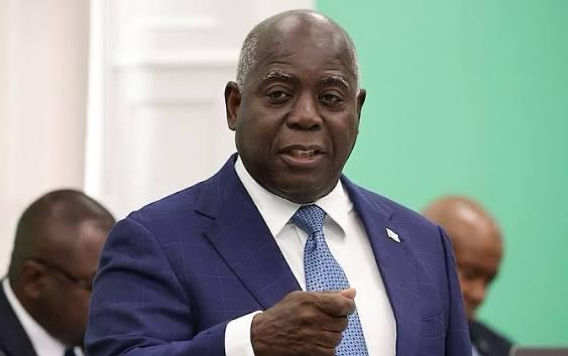
NASSAU| Prime Minister Philip Davis has announced that The Bahamas recorded a preliminary fiscal surplus of $39.3 million for the 2025/2026 fiscal year, declaring that the result marks the first fiscal surplus recorded in an independent Bahamas.
Tabling the Ministry of Finance’s Monthly Fiscal Summary Report for June 2026 in the House of Assembly, Davis said the surplus represented 0.2 per cent of gross domestic product (GDP), marking a significant turnaround in the Government’s fiscal position over the past five years.
“In the space of five fiscal years, the public finances have moved from a deficit of 12.5 percent of GDP to a surplus,” Davis told Parliament.
“No previous Government of an independent Bahamas has recorded a fiscal surplus. This one was achieved, moreover, in an election year, when the temptation to loosen the public purse is greatest.”
The preliminary figures show that total revenue for the fiscal year reached $3.96 billion, an increase of 16.6 per cent over the previous year and equivalent to 101.7 per cent of the budgeted amount.
Tax revenue rose by 13 per cent to $3.42 billion, supported by increases across the major revenue categories. Value Added Tax (VAT), the Government’s principal revenue source, increased by 14.9 per cent to $1.65 billion.
Taxes on international trade and transactions grew by 4.3 per cent to $908.9 million, which Davis attributed to continued growth in tourism arrivals and domestic demand.
Non-tax revenue recorded one of the strongest increases, rising by 45.4 per cent to $543.3 million, driven primarily by higher property income and increased collections from the sale of Government goods and services.
Total expenditure for the year increased by 12.6 per cent to $3.92 billion, leaving the Government with a preliminary surplus of $39.3 million.
Recurrent expenditure rose by 9.7 per cent to $3.51 billion, reflecting higher spending on employee compensation, goods and services, subsidies and social assistance.
Davis said the spending supported essential public services, assisted vulnerable households and invested in the public sector workforce, while the Government kept the public payroll within budget.
“The House is entitled to know how this result was achieved, because it was the product of deliberate policy,” he said.
“This Government chose to strengthen revenue by improving collection and compliance rather than by imposing new burdens on households already under pressure.”
The Prime Minister’s remarks framed the surplus as the outcome of revenue collection and compliance measures rather than additional tax burdens on households.
Davis said the monthly pattern of revenue and expenditure demonstrated how the Government’s fiscal position improved as the year progressed.
The first six months of the fiscal year recorded deficits, which he said was consistent with the seasonal timing of Government revenue. From January onward, however, the fiscal position strengthened, with the Government recording a surplus in every month through June.
The final quarter alone generated a surplus of $196.6 million, helping to offset the deficits recorded earlier in the year.
June ended the fiscal year with a particularly strong performance, as total revenue rose by $467 million, or 150.7 per cent, to $777.1 million compared with June 2025.
Tax revenue increased by $307.2 million during the month, including a $135.2 million rise in VAT collections that incorporated the settlement of outstanding arrears.
Taxes on financial and capital transactions rose by $35.3 million, primarily due to stamp duty on share transfers, while taxes on international trade and transactions increased by $44.4 million, supported by departure tax and excise duty receipts.
Non-tax revenue also contributed to the June performance, rising by $159.8 million as a result of dividend receipts, most of which were applied to settling outstanding Government obligations.
Despite the substantial increase in revenue, Government spending also rose during June.
Recurrent expenditure increased by $279 million to $547.6 million, largely reflecting payments for goods and services and subsidies. Capital expenditure rose by $82.7 million to $98.7 million.
Nevertheless, the Government recorded a monthly surplus of $130.7 million in June, compared with $25.4 million in the corresponding month of the previous year.