

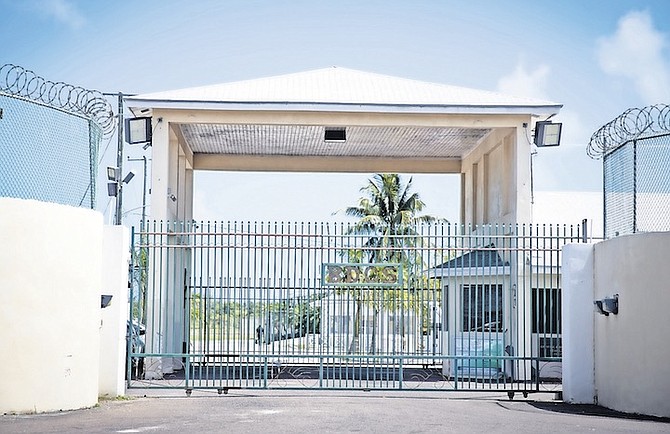
King Eric And His Knights Sang a Song: Soley Married / Can’t Find Jerry Roker In Town.
The steady, syncopated ticking of the grandfather clock in the corner of Arthur’s living room was the only sound interrupting his thoughts. He stared down at his modern smartphone resting on the coffee table—a sleek, innocent-looking rectangle of glass and metal that most people treated as a mere toy or a convenience.
To Arthur, it was a homing beacon. A digital confession booth.
He leaned back, a dry smile touching his lips as he scrolled through the morning news headlines flashing across the screen: “Department of Corrections Officer found with drugs inside his shoes! Kenton Roker Morley, 27, arrested at Nassau prison.”
Arthur shook his head. “Thirty years,” he muttered to the empty room. “Thirty damn years ago, and they still don’t get it.”
His mind drifted back to 1996. He could still hear the crackle of the long-distance line, static-heavy and distant, when Elisha “Obed” Ferguson had called him all the way from Florida. Obed’s voice had been drop-dead serious, stripped of its usual warmth. “Arthur, listen to me,” Obed had warned over that primitive connection. “The USA can hear every single conversation you have on that cell phone. Every single word. Don’t think for a second you’re talking in private.”
That was three decades ago. If the authorities could map your life through a bulky, first-generation mobile brick in the nineties, what did these modern-day fools think was happening now?
Arthur chuckled, his memory tracking even further back into the vault of his life. He thought of 1972—fifty-four long years ago. He had been a young man then, working for a brilliant businessman of Chinese descent who ran a bustling food store right on East Street. While the rest of Nassau was living in a world of carbon-copy receipts and analog lockboxes, this man was living in the future. He had rigged up a live-stream camera and voice-recording system that blanketed the entire grocery store. If you pocketed a tin of corned beef or whispered a conspiracy in the aisle, the boss saw it, and the boss heard it, in real-time. Fifty-four years ago, surveillance was already airtight in a local grocery store on East Street.
Yet, here in 2026, people were still acting completely blind. Arthur read further down the article. This kid, Morley, had been boasting in 2021 about catching the bus. By 2024, he was suddenly cruising around Nassau in his own brand-new car on a rookie corrections officer’s salary. He might as well have put a flashing neon sign on his roof reading,” Look at me!”
The boy had walked right up to the prison gates, thinking he was clever, with illicit packages stuffed awkwardly into his shoes. He didn’t realize the trap had been set months ago. He didn’t care about the constant warnings from the Department of Corrections. He didn’t think about his pension, or his health benefits, or the fact that his new car was probably tracked by a dozen different global satellites and cell towers from the moment he turned the ignition.
They searched his shoes. They raided his car. They found the drugs, they found the burner phones, and, just like that, Morley’s future vanished behind the very bars he was paid to guard.
Arthur locked his phone, the screen going black, reflecting his own weathered face. It baffled him. It truly, deeply baffled him how silly, how downright ignorant people could be. In a world bound together by invisible webs of global data, people still believed they could dance in the dark and hide their crimes from the authorities.
A note to the unwise, Arthur thought, lifting his coffee mug to his lips: technology is so advanced today, global intelligence knows your body better than you do. They can practically tell you that you’re going to take a leak or pass gas a minute before your brain even registers the urge.
Morley wouldn’t be the first, and he certainly won’t be the last to trade his freedom for quick cash. Arthur sighed, looking out the window at the Nassau sun warming the streets.
Ah, well. Such is life.