
Dear BP,
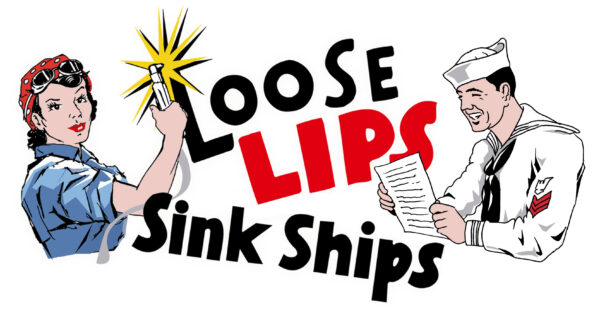
“Loose lips sink ships” is a perfect phrase for what happens when officials speak without caution. It originated as a World War II slogan warning against careless talk that could reveal military secrets to the enemy. In modern politics, it’s a reminder that even a single offhand remark can ripple into diplomatic crises, economic fallout, or political embarrassment.
Over the years, there have been numerous instances in which political opponents have weaponized a politician’s offhand or flippant remarks to damage a government. Here are some examples and their consequences.
Examples of Controversial Remarks:
| Official | Remark | Consequence |
| Boris Johnson (UK Prime Minister) | In 2020, Johnson joked about shaking hands with COVID-19 patients early in the pandemic. | The comment was widely criticised as irresponsible and undermined public health messaging. |
| Donald Trump (US President) | Suggested during a press briefing in April 2020 that disinfectant could potentially be used inside the body to treat COVID-19. | Sparked global backlash, forced medical experts to issue warnings, and damaged the credibility of the pandemic response. |
| Shashi Tharoor (Indian MP) | In 2018, remarked that Prime Minister Modi wore “a suit worth ₹10 lakh” and compared him to a “chaiwala.” | The comment was perceived as elitist, prompting political backlash and reinforcing Modi’s populist image. |
| Joe Biden (US President) | In 2022, Biden said the US would defend Taiwan militarily if China invaded. | The White House had to clarify the statement, as it contradicted the official “strategic ambiguity” policy. |
| Alexander Haig’s 1981 Remark After Reagan’s Shooting | After President Ronald Reagan was shot on March 30, 1981, Secretary of State Alexander Haig rushed to the White House briefing room and declared, “I am in control here.” | He also incorrectly described the constitutional line of succession, placing himself ahead of the Vice President and Speaker of the House. |
Given the potential negative consequences of ill-considered comments, one would think that some Progressive Liberal Party (PLP) cabinet and parliamentary members would be more inclined to think before they speak. Alas, that is not the case, even though domestic remarks can fuel political backlash or damage the party’s credibility. Indeed, some individuals have been repeatedly warned by senior members of the PLP to carefully consider their comments to the press, but to no avail. So, like moths to the flames, they plunge on, leaving misstatements, ambiguity and confusion in their wake, which must be cleared up by more seasoned PLP members.
This behaviour has prevailed since the 2021 PLP victory. It is so habitual that one observer of the party has repeatedly commented that “the most dangerous ground you can occupy is between some PLP cabinet ministers and a microphone.” So, there we have it: on the eve of a general election, PLP members are going dangerously off topic when the prudent thing is to make no immediate comment, or, better still, seek guidance from their permanent secretaries and have all of the facts on hand. The key here is to remember that you don’t have to answer every question.
The media’s publication deadlines are of no concern to you. Also, as their headlines will only include a weaponized snippet of your off-the-cuff statement, and headlines are all that some people read about the party, it is a distraction to clean up your mess.
Sincerely,
Michael J. Brown