
Dear Editor,
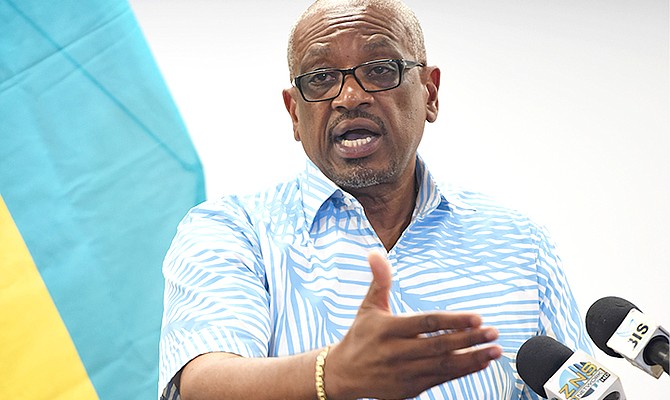
The rise of Dr. Hubert Alexander Minnis from the humble streets of Bain Town (Peter Street) to the highest office in the Commonwealth of The Bahamas is a classic tale of determination, only to be followed by a swift and politically bruising fall from grace.
The Rise: The “Doc” Who Listened
Hubert Minnis’s journey began not in the halls of privilege, but in a working-class Nassau neighborhood. He fought his way to the University of the West Indies, earning his medical degree and becoming a highly respected obstetrician and gynecologist. To thousands of Bahamians, he was simply “Doc”—a man who delivered their children and understood their struggles.
His political rise began in 2007 when he won the Killarney constituency for the Free National Movement (FNM). Serving as Minister of Health, his reputation as a quiet, hard-working technician grew.
When the FNM suffered a crushing defeat in 2012 and party leader Hubert Ingraham abruptly retired, Minnis was thrust into the leadership.
He was not a natural orator. He lacked the charismatic, booming eloquence traditionally demanded by Bahamian voters. Yet, his plain, sometimes awkward speaking style became his greatest asset.
In an era where the ruling Progressive Liberal Party (PLP) was plagued by allegations of corruption and arrogance, Minnis positioned himself as the unpolished, honest alternative. His campaign slogan, “It’s The People’s Time,” resonated deeply.
In May 2017, the historic “Red Wave” swept the country. The FNM won an overwhelming 35 out of 39 seats in Parliament. Dr. Minnis was sworn in as Prime Minister, carried on the shoulders of a populace desperate for transparency, fiscal responsibility, and change.
The Peak and the Pivot
The early years of the Minnis administration focused on stabilizing the economy and introducing anti-corruption measures. However, the administration quickly faced a steep learning curve.
Implementing an unpopular increase in the Value Added Tax (VAT) from 7.5% to 12% eroded some early goodwill, but Minnis maintained control, presenting himself as the disciplined leader making tough choices for the nation’s financial health.
Then came September 2019. Hurricane Dorian, a monstrous Category 5 storm, decimated Abaco and Grand Bahama. It was an unprecedented national tragedy.
Minnis was forced into the role of a wartime commander, managing a massive humanitarian crisis and an economy shocked to its core. While critics questioned the speed of the government’s initial response, the sheer scale of the disaster briefly united the country behind its leader.
The Sad Decline and Fall
The true catalyst for Minnis’s decline arrived in early 2020: the COVID-19 pandemic. As a medical doctor, Minnis approached the virus with a clinical mindset. He assumed total control, utilizing emergency powers to institute strict lockdowns, night-time curfews, and weekend shutdowns.
Initially, the public praised his decisive action. But as the months dragged on, the economic toll grew catastrophic for a nation reliant on tourism.
The decline became a matter of style and substance. The consultative leader who once promised “It’s The People’s Time” began to be perceived as authoritarian.
His weekly national addresses, once comforting, became sources of anxiety as citizens waited to hear if their livelihoods would be locked down for another fortnight. The closing of beaches, the strict enforcement of minor curfew violations, and the economic strangulation of small businesses created deep-seated resentment.
Simultaneously, internal party friction fractured his support. High-profile resignations and public disagreements with colleagues painted a picture of a leader who had become isolated and resistant to counsel.
Sensing a window of opportunity and betting that his handling of the pandemic would secure a second term before the economy worsened further, Minnis called a snap election for September 16th 2021, eight months ahead of schedule.
It was a fatal miscalculation. The electorate, exhausted by lockdowns, frustrated by the slow pace of the post-Dorian reconstruction, and eager to punish what they saw as heavy-handed governance, stayed home or flipped their votes.
The FNM suffered a devastating defeat, winning only 7 seats. Dr. Minnis went from a historic majority to a resounding rejection in just four years.
Shortly after the election, under immense pressure from within his own party, he stepped down as leader of the FNM, retreating to the backbenches of Parliament.
The man who had delivered thousands of Bahamian babies and promised to deliver the nation into a new era of transparency found his political legacy defined by the very restrictions he believed would save it.
The Fall: The Lonely Independent Bid
The point of no return arrived ahead of the May 12th 2026 General Election. FNM Leader Michael Pintard delivered a lethal political blow: the party officially denied Dr. Minnis the nomination for Killarney, ratifying Senator Michela Barnett-Ellis instead.
Incensed and insisting that the FNM had “abandoned” him, Dr. Minnis made a daring, historic decision. On his 72nd birthday, he walked into the Gambier Primary nomination center to register as an Independent candidate. No former Bahamian Prime Minister had ever taken such a step.
Minnis campaigned on the premise that he was “the unbridled voice of the people,” free from party politics, and expressed absolute confidence that Killarney would remain loyal to the man over the machine. But Election Day on May 12, 2026, delivered a brutal reality check.
The voters of Killarney sent a definitive message: in Bahamian politics, the party structure reigns supreme. The FNM machinery consolidated around Barnett-Ellis, while traditional anti-government voters remained solid behind the ROCKSTAR Philip Brave Davis PLP. Dr. Minnis was left stranded in a distant third place, capturing barely a tenth of the total votes cast.
The best advice for Dr. Hubert A. Minnis and the Free National Movement (FNM) moving forward is to prioritize generational leadership transition and party unity over personal ambition. The ultimate moral of their political journey is that achieving short-term vindication is empty if it fractures the party and guarantees collective defeat.
Thank you,
GCF