

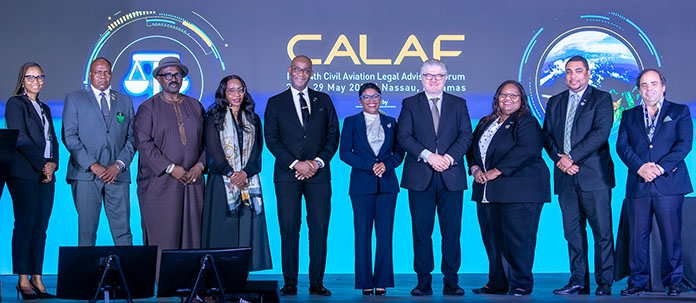
Minister Coleby-Davis: “The future of aviation cannot be built on outdated systems or fragmented approaches”NASSAU, The Bahamas — At the Fourth Civil Aviation Legal Advisors Forum (CALAF/4) Closing Meeting, Minister of Energy, Utilities, and Aviation the Hon. JoBeth Coleby-Davis stated in her remarks, May 29, 2026: “the future of aviation cannot be built on outdated systems or fragmented approaches. It must be built on modern legal frameworks, resilient institutions, and meaningful collaboration among States and stakeholders.
“As an archipelagic nation, aviation is essential to our economic development, our tourism industry, our emergency response capability, and the daily connection of our islands and people. Aviation is not optional for us — it is fundamental!”
She continued: “That reality strengthens my commitment, as Minister of Energy, Utilities and Aviation, to ensuring that aviation receives the focus, support, and attention it deserves within the national development agenda. I want the aviation community, both here in The Bahamas and internationally, to know that this Government recognizes the critical importance of safe, secure, sustainable, and well-regulated aviation systems.”
Minister Coleby-Davis said, in her address at Baha Mar, that strong oversight is not a barrier to growth; it is the foundation of public confidence and long-term success. She acknowledged the important responsibility carried by aviation legal advisers, regulators, technical professionals, and industry leaders. “Your work often happens behind the scenes, but its impact is felt every single day. The travelling public may never see the regulations you draft, the agreements you negotiate, or the legal risks you help prevent, but aviation depends on that work.
“Good legal frameworks matter. They matter because they create certainty in times of change. They matter because they protect safety while enabling innovation. And they matter because they establish accountability and transparency, and they matter because international aviation only functions effectively when States are willing to cooperate within a shared system of rules and standards.”
She said in today’s environment, collaboration is no longer simply beneficial, it is necessary. No State can address modern aviation challenges alone. Cybersecurity threats do not respect borders. Environmental concerns affect all nations. Emerging technologies are advancing faster than many legal systems can adapt. Small island developing States face unique vulnerabilities and capacity challenges that require partnerships, technical assistance, and regional solidarity.
“I wish to be clear: Forums such as CALAF are invaluable. They allow us not only to discuss problems, but to build relationships, exchange ideas, strengthen capacity, and move collectively toward solutions.
“I am pleased to note that this Forum featured a panel discussion on the topic of passenger rights. I believe that there is a need for stronger and clearly defined regulations to ensure airlines consistently uphold transparency, provide assistance, and address passenger grievances effectively.
“While it is unfair to hold airlines accountable for delays related to air traffic control, poor weather that may cause flight disruptions and cancellations; the right to care where circumstances are within an airline’s control must be given greater focus and attention.
“As I prepare to take my seat, I wish to commend the International Civil Aviation Organization for its continued leadership and vision. I also wish to congratulate the Civil Aviation Authority Bahamas, under the leadership of Director General Chequita Johnson and her team, for successfully hosting this important event and for the professionalism shown throughout the week.
“To all delegates and visitors, thank you for choosing The Bahamas. We hope you leave not only with valuable professional insight, but also with warm memories of our country and our hospitality.”